
How Regional Alliances Are Reshaping Global Power (BRICS, SCO, NATO)
In today's multipolar era, global politics’ center of gravity is increasingly conditioned by regional blocs. Because of rising tensions in global politics and changes in economic systems, BRICS, SCO, and NATO are acting as major agents of reforms in global politics’ traditional scenarios of power.
The Formation of the BRICS
The formation of the BRICS nations, comprising Brazil, Russia, India, China, and South Africa, has proved to be a strong coalition that represents a major part of the world’s population and economic power. This group has emerged as a force that will act as a voice to challenge the dominance of the West and will help to make modifications in the existing policies of the global governance framework. This will be achieved through the formation of a “New Development Bank.”
The Shanghai Cooperation Organization (SCO)
The SCO, established in 2001, was known to have mainly concentrated on regional security, economic cooperation, and cultural ties amongst its members such as China, India, and Russia. The recent expansion of the SCO into new territories of nations such as Iran reveals its own ambitions of strengthening cooperation to counter terrorism, separatism, and extremism. The growing influence of SCO reveals readjustments within regional balances of power in evolving global concerns of security.
NATO: Responding to a New Reality
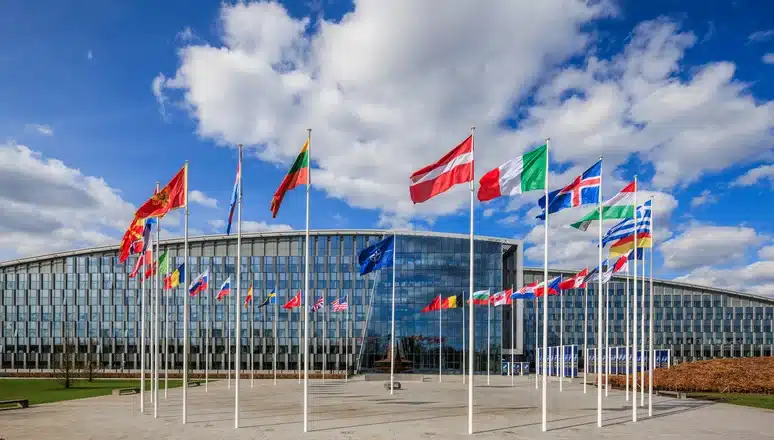
Although NATO membership and activities have long been perceived in a transatlantic context, NATO is facing the reality of a changing international situation and is forced to adjust its strategic policy to meet those demands. The current increase in tensions with Russia, especially in the aftermath of the crisis in Ukraine, led NATO to strengthen its presence on its eastern flank, summon extraordinary meetings, and improve military preparedness levels.
The Interplay of Alliances
BRICS, SCO, and NATO are a complex example of global politics in which there is competition for influence between BRICS and SCO in promoting their alternative vision of global order and the ability of NATO to change to overcome the challenge of BRICS and SCO. The dynamics of BRICS and SCO represent a challenge for influence or competition for influence for NATO or other global actors in addressing common issues such as terrorism and global warming.
Conclusion
However, as regional alliances are becoming an increasing reality, it would be difficult to ignore the effect that they are going to have upon global power dynamics. It is likely that the interaction between BRICS, SCO, and NATO is going to influence global geopolitics in some manner that would require foresight. It is essential that in this new dynamic that is being witnessed, global policymakers understand the importance that is being placed upon regional alliances in creating a stable global order.
Related Articles

How Social Media Fuels Political Polarization
Explore how social media is a double-edged sword in today's politics, intensifying divisions while also enabling vital discourse.

Discussion
Loading comments…
